Sustainability · AI
Eco city assistant
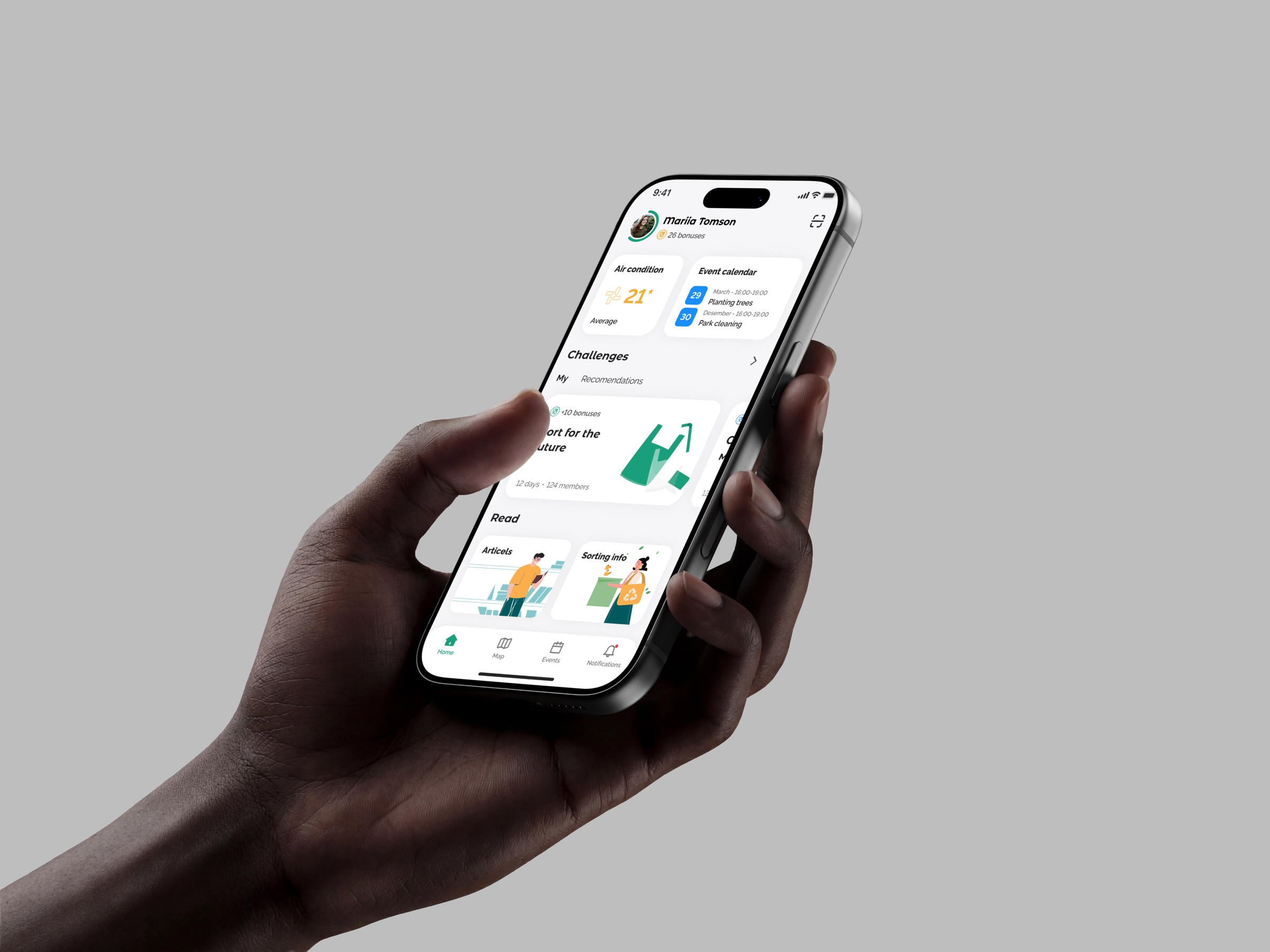
One app for sustainable city living: recycling scanner, eco map, live air quality. I took it from resident interviews and a CJM workshop to a tested iOS MVP, scoped to the three features people ranked highest.
- Client's country
- Ukraine
- Platform
- iOS
- Team
- 8 people · 6 designers
- Duration
- 4 months · 2021–2022
Overview
One app for sustainable city living.
Product
A recycling scanner, an eco map, live air quality, community events.
What I owned
I worked on research through MVP: from interviews and CJM to tested flows.
Result
Shipped as an iOS MVP for one city, built to scale to more.
Context
01
Product
iOS app that makes eco habits practical: scan a material → learn how to recycle it and where. Map of sorting points with routing. Air quality in real time. Events, challenges, bonuses.
02
Users
City residents, eco-activists first. The survey put numbers on the appetite: 73% follow their region's ecology and 66.4% would join a volunteer clean-up, people who wanted quick answers, not lectures.
03
Market
No competitor combined recycling guidance, environmental data and community: only single-purpose apps existed. We analyzed them by category: sorting, eco-indicators, city routes.
Starting point: a web recycling map with low engagement. Research showed it had to become a mobile app.
Approach
Understand
Surveys, interviews, a competitor map: what residents actually need.
Scope
The effort-impact matrix decides what ships now vs later.
Validate
Maze runs and moderated sessions test every core flow.
The effort-impact matrix is what turned a wish-list into an MVP: it decided what shipped now vs later.
Process
Core functionality
01
Scanner · AI material recognition
Problem
Recognition had to be right, not approximately right, because a wrong call sends someone's plastic to the wrong place. The model needed long validation to keep false recycling advice down.
Hypothesis
If the scanner answers in three steps, what the marking means, how to prepare it and where to take it, a person sorts it on the spot instead of searching.
Solution
Point the camera at a label. Three steps: what it means → how to prepare it → where to take it.
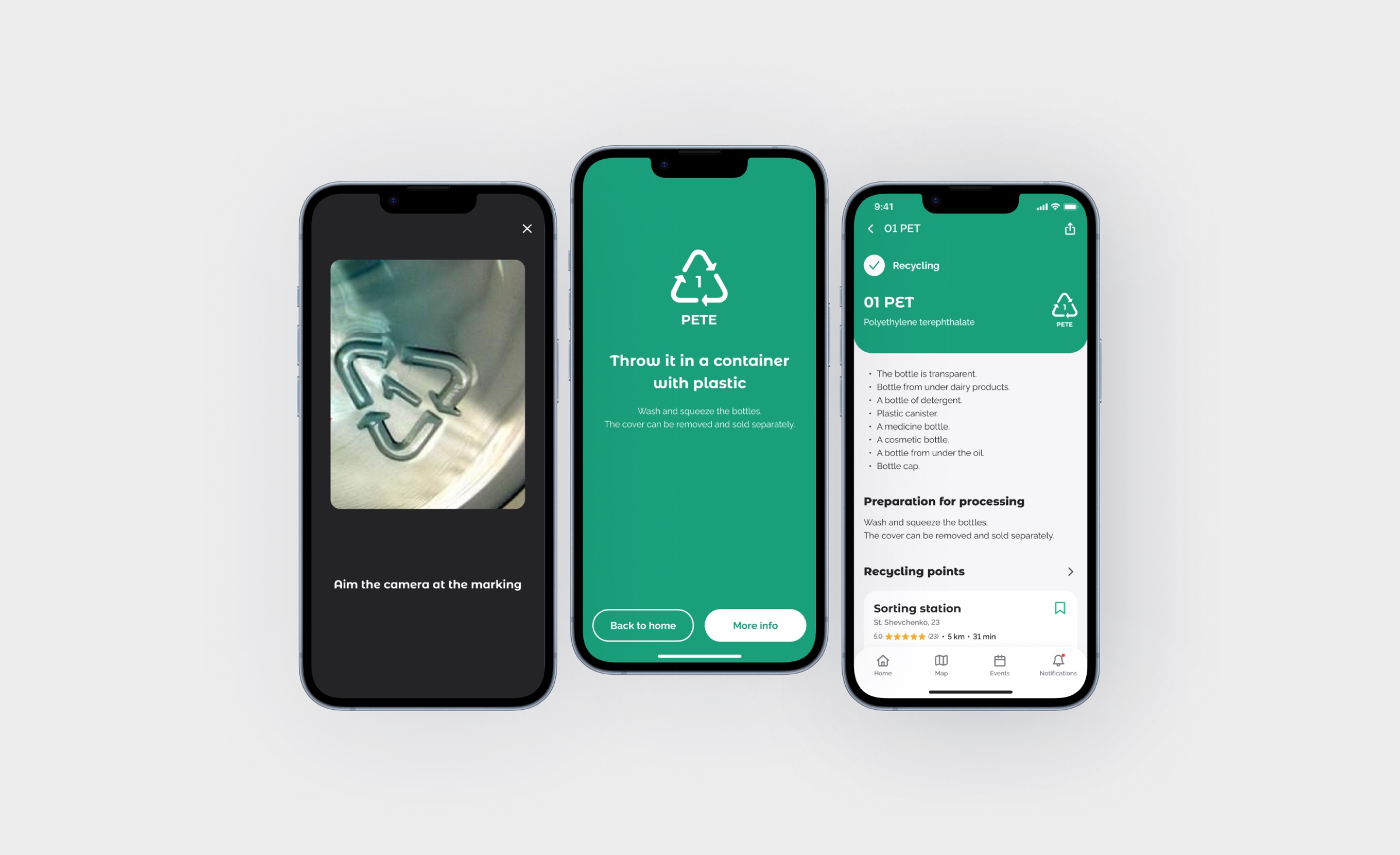

Accuracy was the hard part.
02
Eco map
Problem
A map is alive only while its data is: sorting points, drop-offs, refill machines, events. That took partnerships with waste services, environmental agencies and eco-communities, and a web admin panel so the data could be updated without a release.
Hypothesis
If routing opens in Google Maps instead of a navigation of our own, people will trust the directions more than anything we could build.
Solution
Nearest sorting points, eco-places, water refill machines. Routing hands off to Google Maps, because testing showed users trust it over any custom navigation.
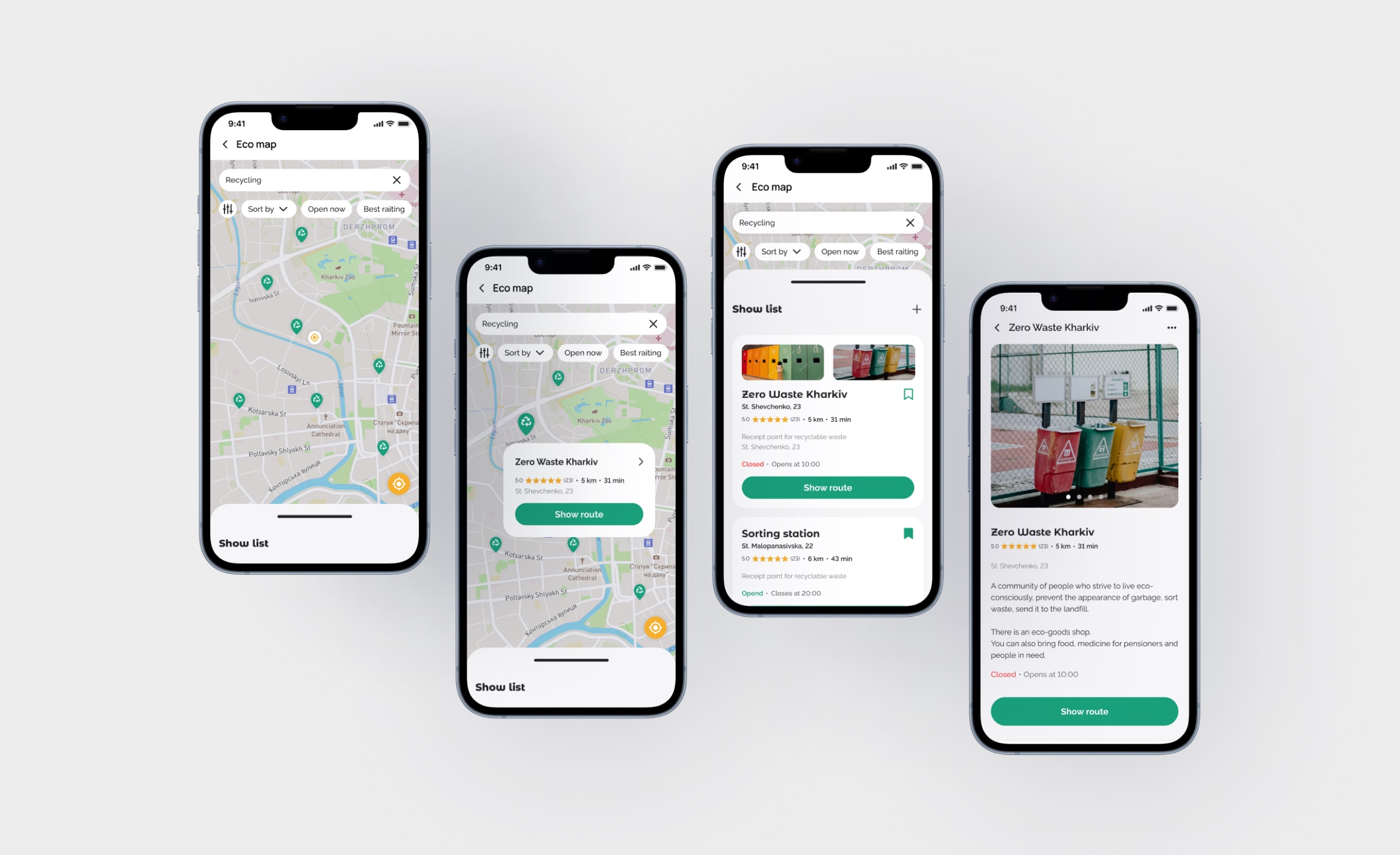
Routes hand off to Google Maps: users trusted it more than ours.
03
Home screen
Problem
Scanner, air, events: everything the app is installed for is easy to lose in a menu.
Hypothesis
If they sit on the home screen, the thing a person came for is one tap away.
Solution
Everything one tap away: scanner, air quality, events, challenges, articles, sorting info.
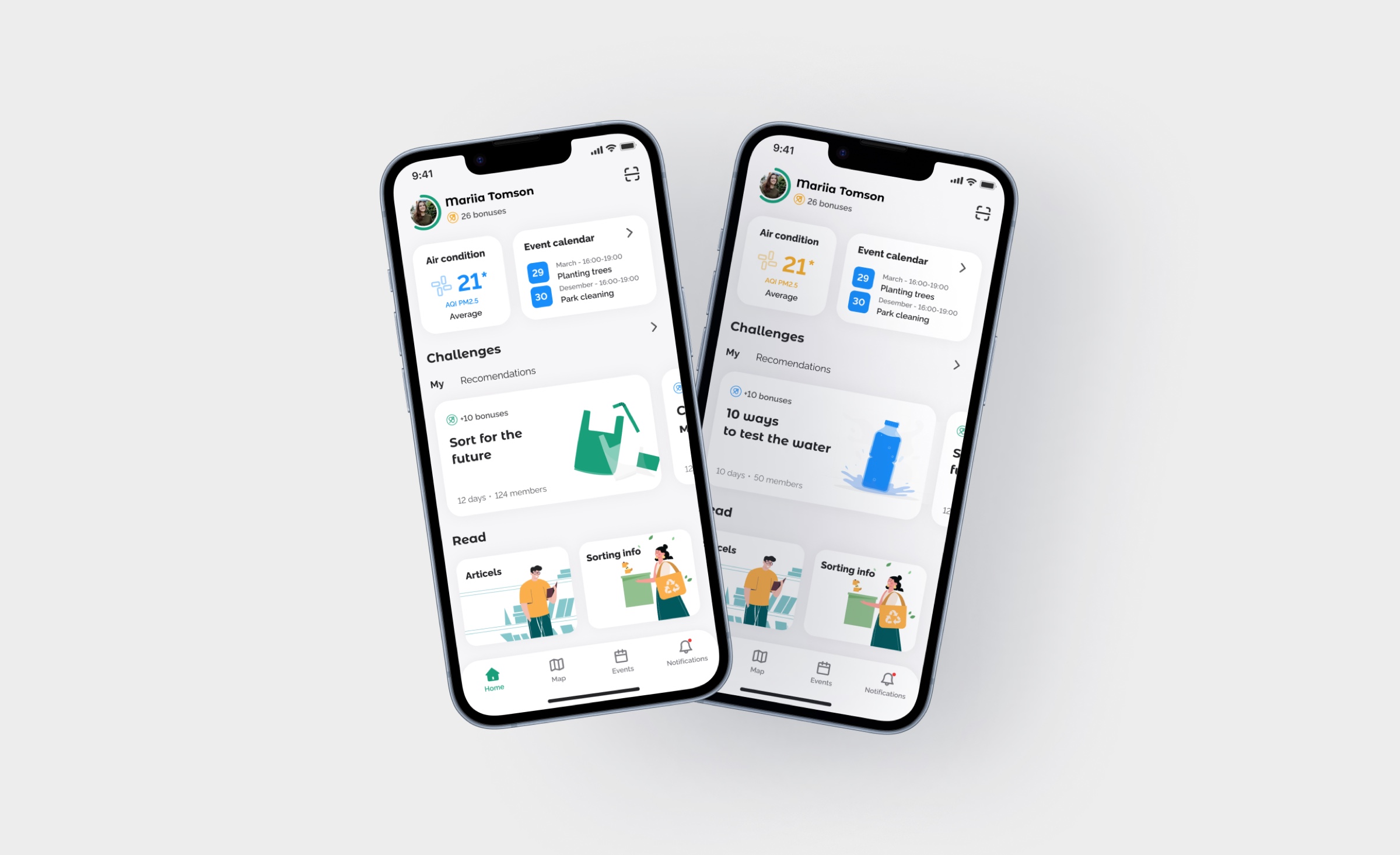
Sorting info was the #1 need.
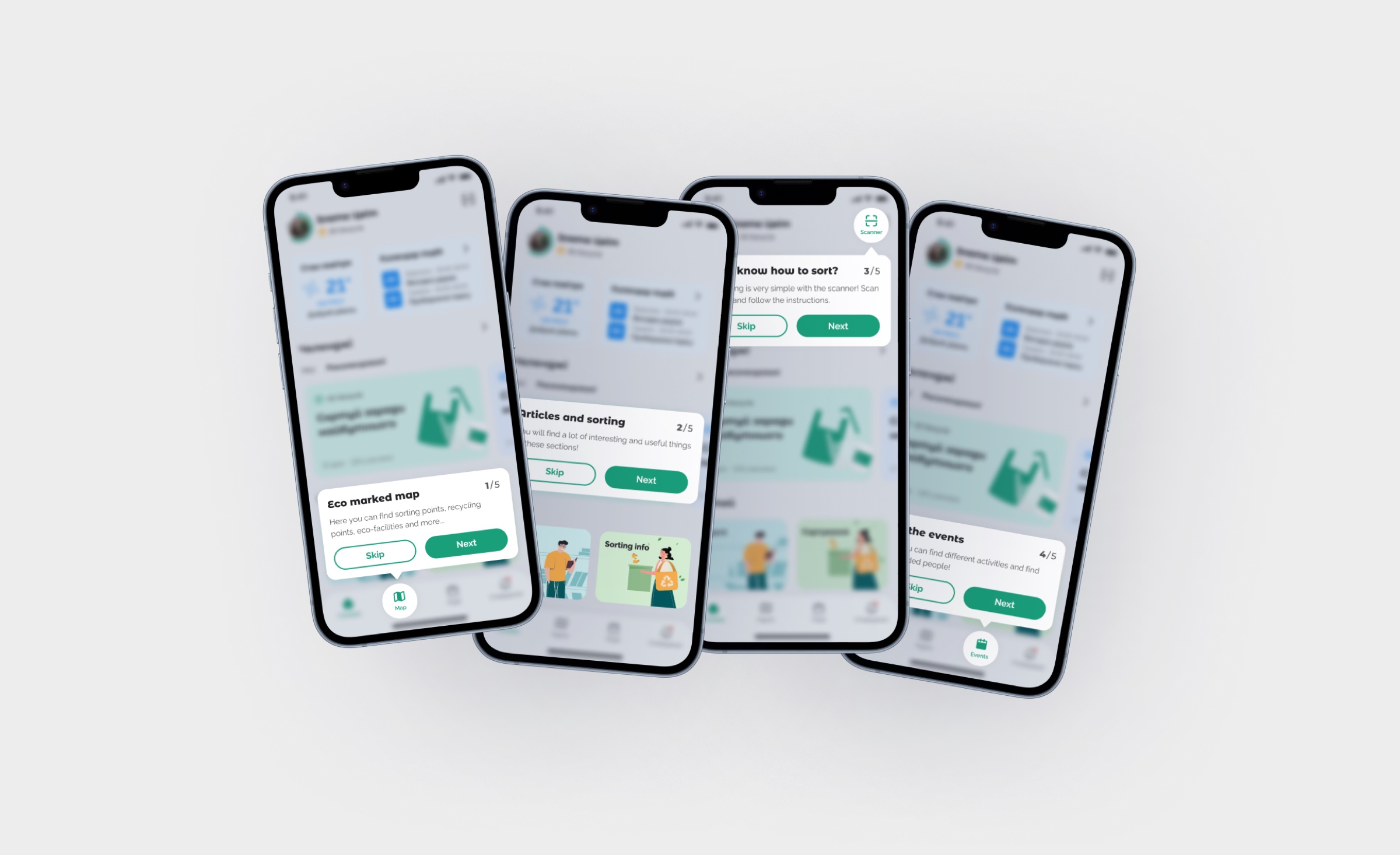
Onboarding: five steps through the app
What the survey and interviews changed
Most people wanted this on a phone.
A mobile app, instead of extending the existing recycling-map website.
Access to sorting information had to be fast above all.
Scanner and sorting sit on the main screen, not behind a menu.
People wanted the city's eco-events gathered in one place.
An event calendar and challenges in the primary navigation.
Respondents were already active volunteers.
Events can be created, not only attended.
04
Air quality
Problem
Air data is only worth showing if it is current and verifiable, which meant integrating verified monitoring sources and processing readings in real time rather than fetching them once.
Hypothesis
If the readings come from verified stations in real time, people will check the air here instead of looking for it elsewhere.
Solution
Real-time city data from verified monitoring sources.
05
Sort guide · Refuse & Reduce
Problem
Sorting rules differ from city to city, and generic advice never answers 'where does this go here'.
Hypothesis
If the rules match what the city actually accepts and the drop-off points are reachable, people do not give up halfway.
Solution
Universal sorting rules adapted to what the city actually accepts. Marking history, recycling points, direct contact with sorting services.
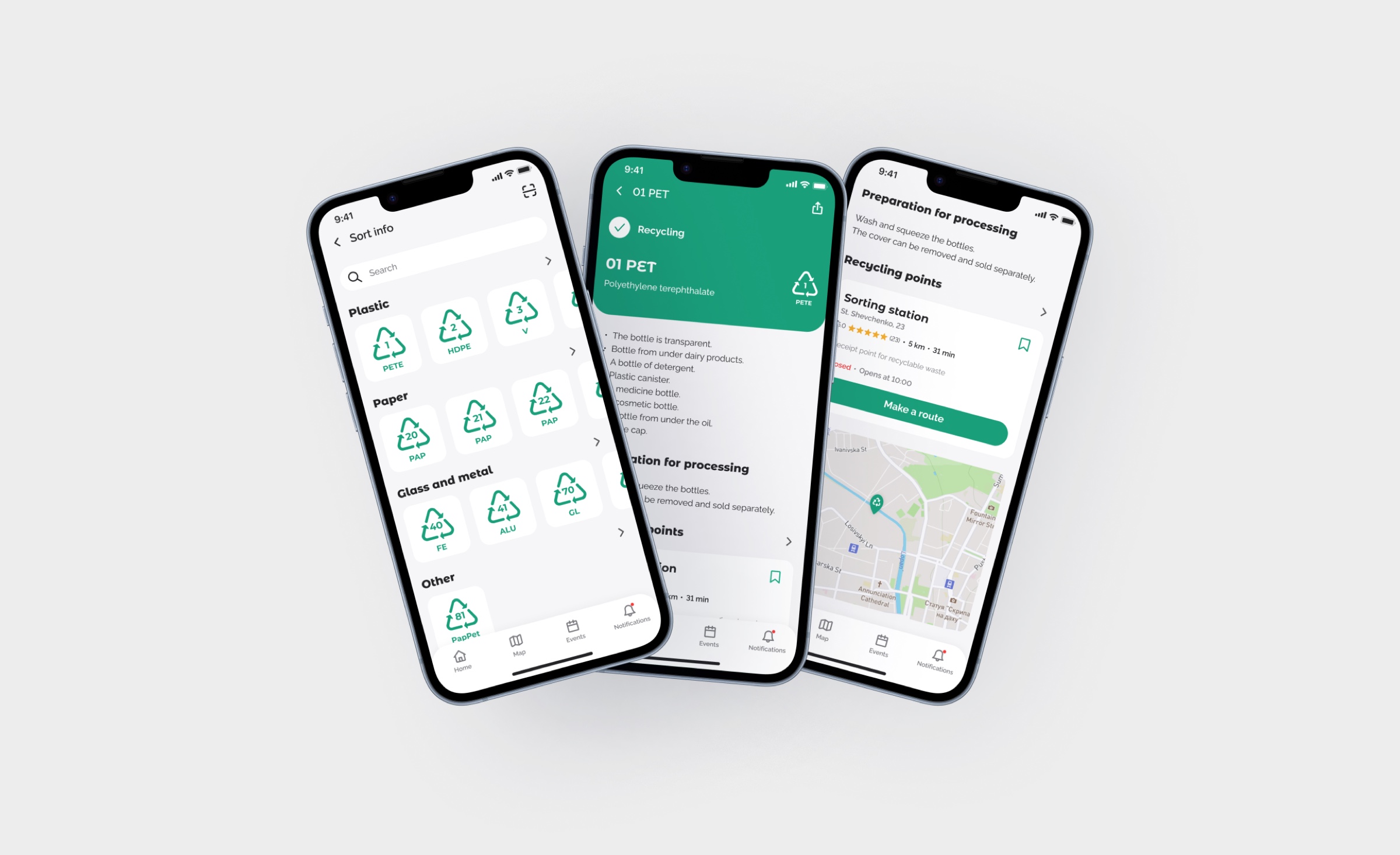
Rules adapted to what this city actually accepts.
06
Events & challenges
Problem
Eco events are scattered across organisers' pages, and a habit kept alone fades fast.
Hypothesis
If events live in one calendar and challenges run with friends, taking part stops being a one-off.
Solution
Join city eco events or create your own. Challenges build habits, solo or with friends.
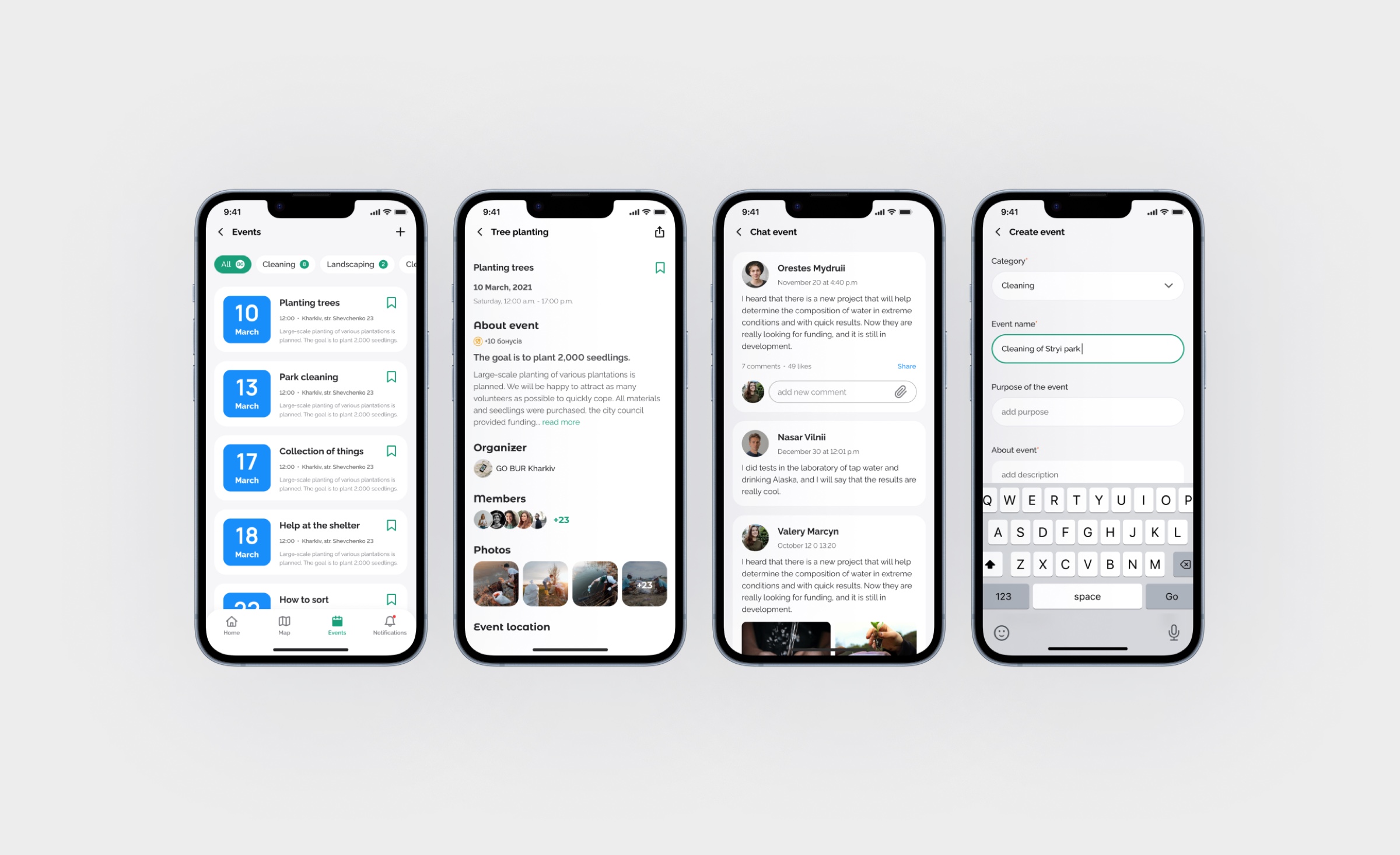
Challenges turn a one-off event into a habit.
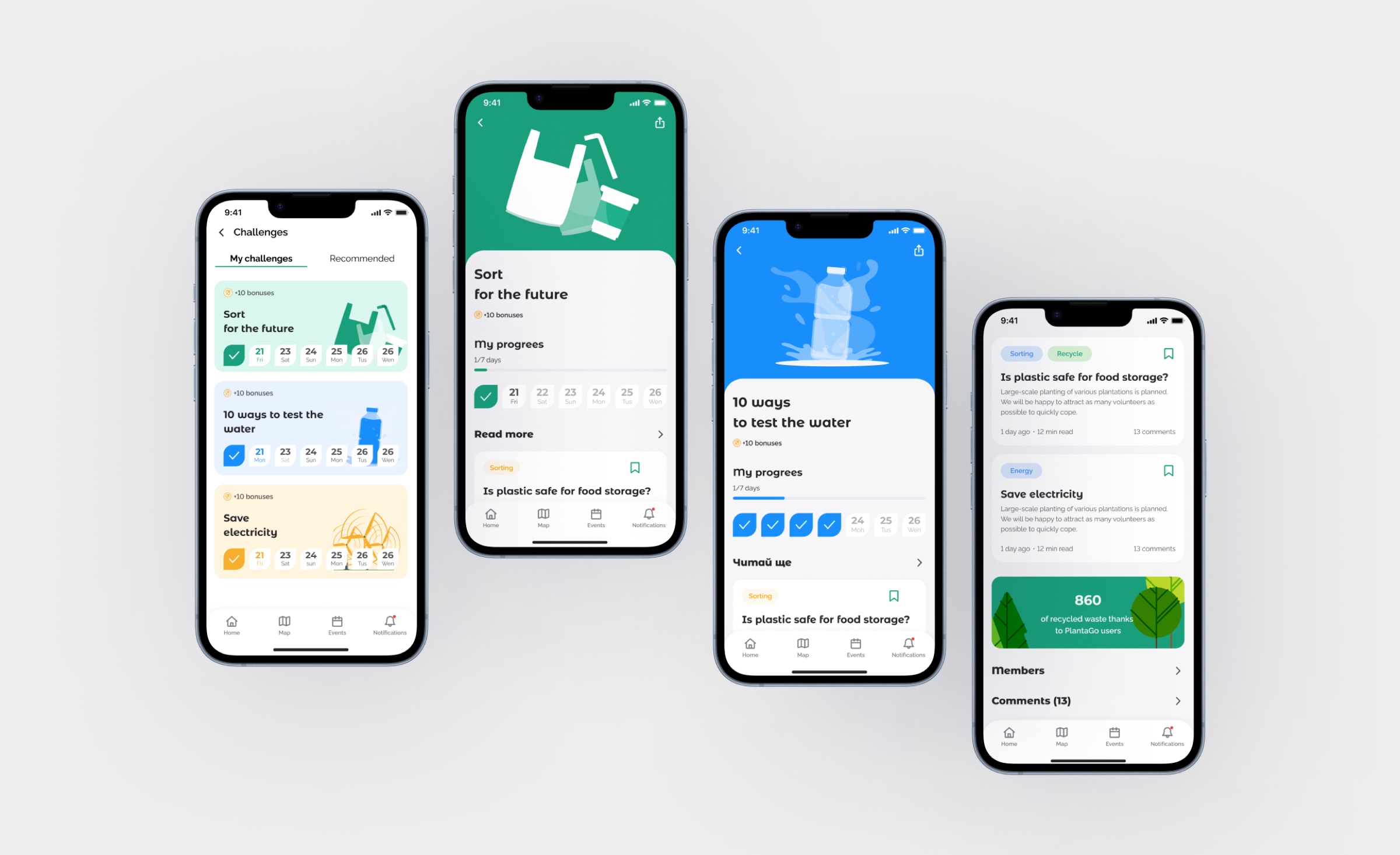
Challenges: daily progress and what to read next
07
Reading & comments
Problem
Explanations about sorting and ecology had to be found elsewhere, with nowhere to ask.
Hypothesis
If articles by interest and comments live in the app, it teaches rather than only directs.
Solution
Articles by interest, saved for later, and a comment thread under each one, so the app teaches as well as guides.
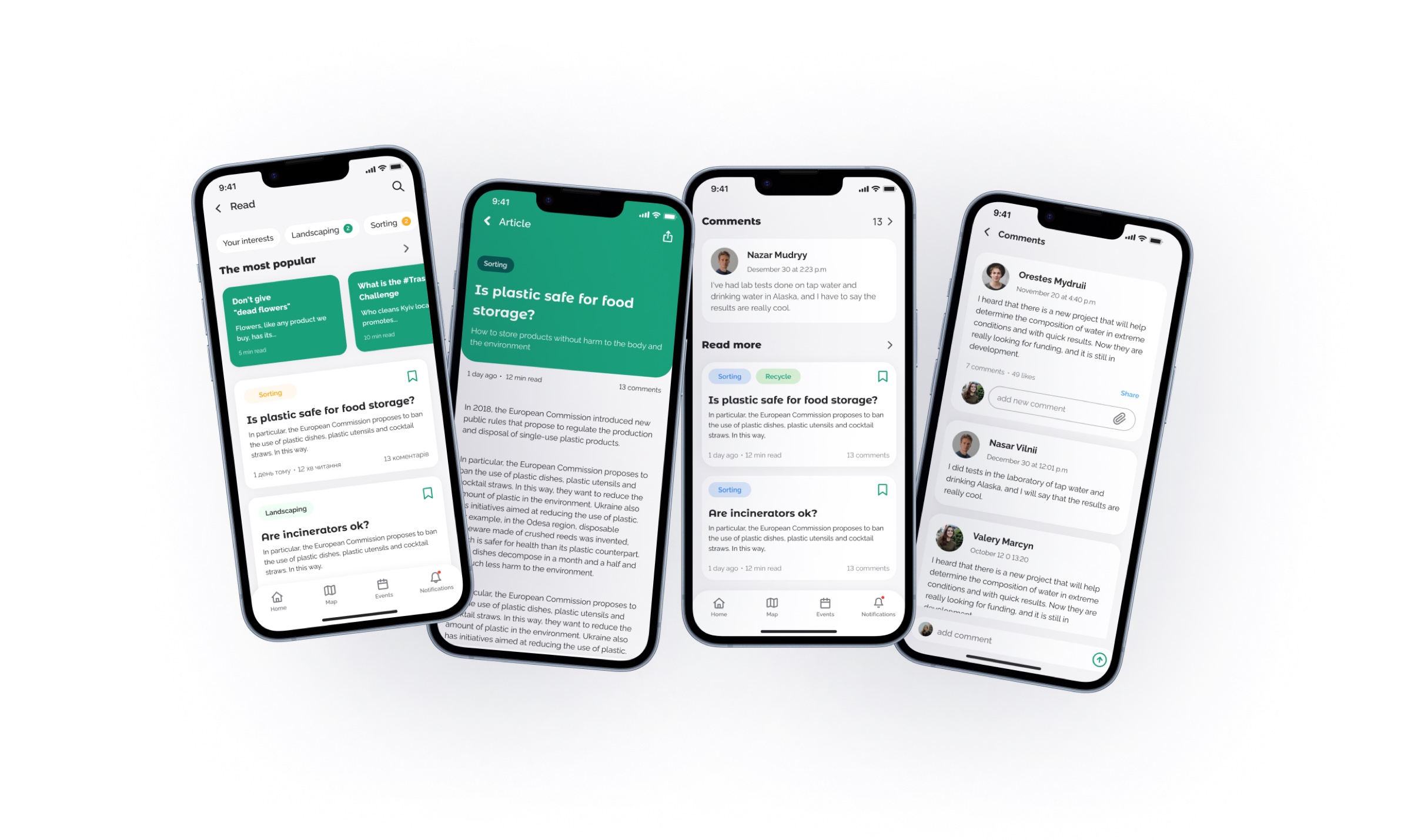
The app teaches, not just guides.
08
Bonuses & levels
Problem
A habit does not come from features. People needed a reason to come back, so activity earns bonuses, challenges run with friends, and levels make the progress visible.
Hypothesis
If activity earns bonuses that can be spent with partners, the habit outlasts the first week.
Solution
Activity earns bonuses redeemable with partners. Gamification keeps the habit loop going.
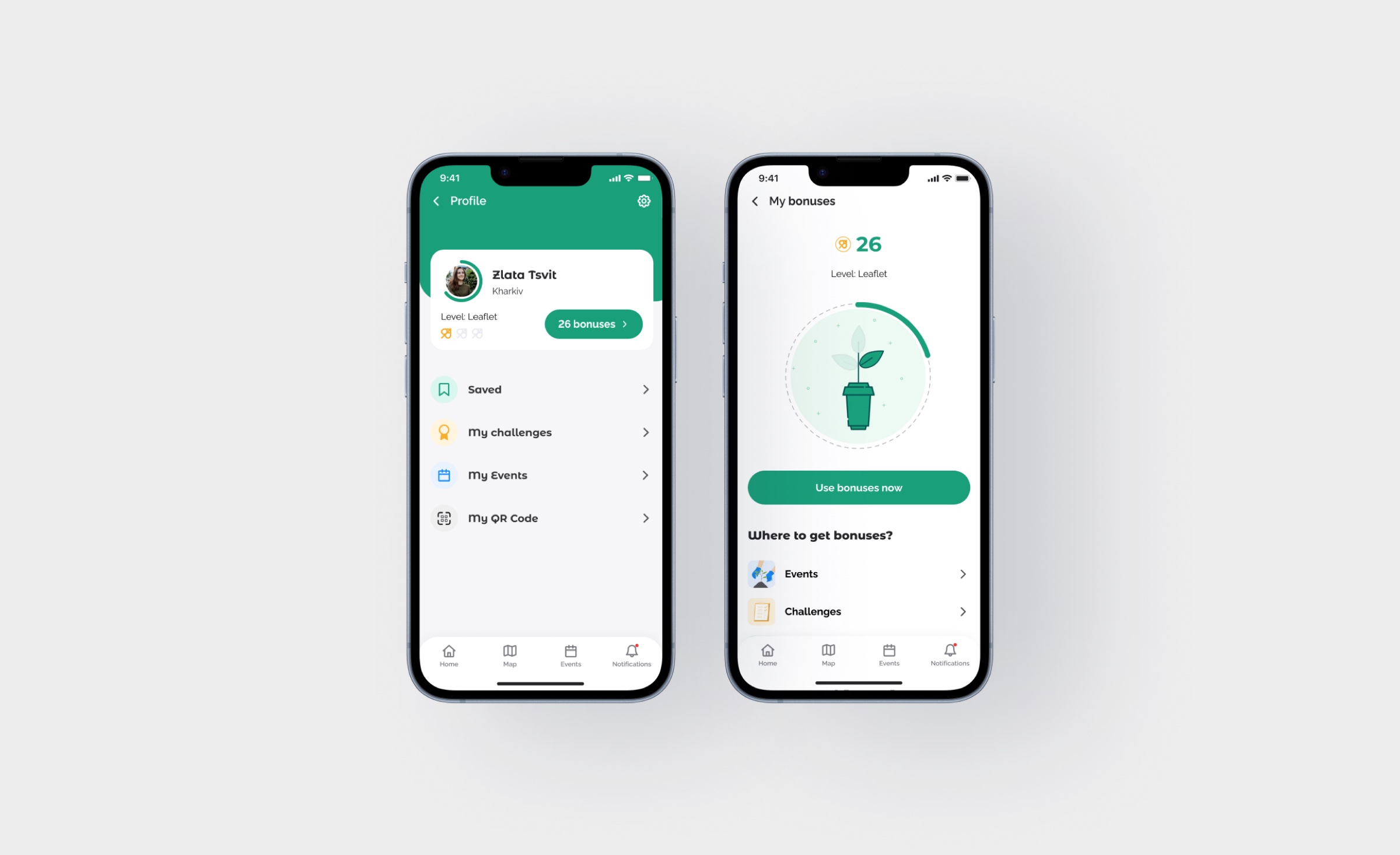
Partner bonuses keep the habit loop going.
Key decisions
01
Scoping the MVP with the effort-impact matrix
Problem
Research produced far more feature ideas than an 8-person team could ship.
Solution
Ran every candidate feature through an effort-impact matrix with the team and stakeholder. High-impact / low-effort shipped first; hard-but-important was scheduled; the rest was cut.
Proof
The MVP shipped on time with the scanner, map and air quality, the three features users ranked highest in interviews.
02
Research with real people, not proxies
Problem
The old web map failed because it was built on assumptions.
Solution
Surveys and interviews with residents, a two-day CJM workshop with the stakeholder and three real respondents, empathy maps, JTBD.
Proof
Findings directly shaped the product: mobile-first (most users refused the web version), sorting info as the front door, event aggregation as a stated need.
03
Don't build what users already trust
Problem
Custom in-app navigation to sorting points scored poorly in testing.
Hypothesis
Users will trust a familiar Google Maps handoff more than any custom navigation we could build.
Solution
Replaced it with a Google Maps handoff for routes.
Proof
Moderated sessions: users completed the route task without hesitation once the handoff appeared.
Outcome
- MVP shipped for one city
- Scanner + map + air quality validated as the core in testing
- Web admin panel enabled scaling map data to new cities
A scattered set of eco resources became one daily-use tool.
What I'd do differently: Define engagement metrics before launch. The case would have numbers today.
Next case
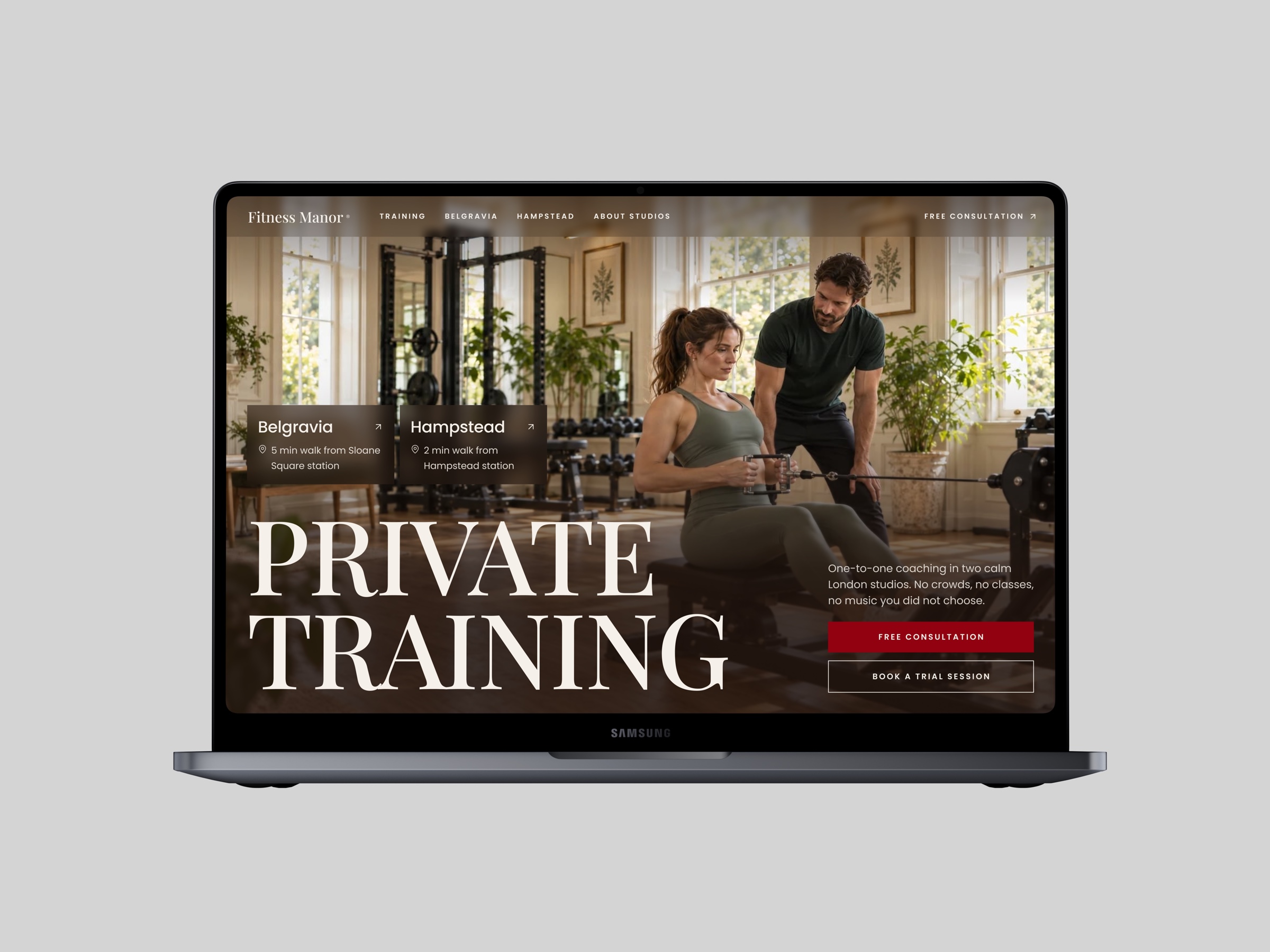
Raising the conversion rate of a private gym
A private personal-training studio in London turned 1% of its visitors into consultations. I rebuilt the path from the first screen to a booked call.
View case